When a roof starts leaking or showing signs of wear, one of the first questions Portland homeowners ask is:
Do I need a roof repair, or is it time to replace the entire roof?
The answer is not always obvious.
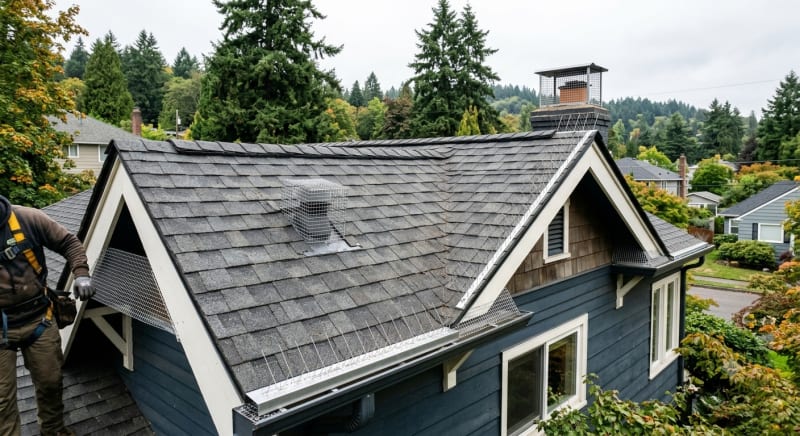
A small leak around a vent or a few damaged shingles may only require a targeted repair. On the other hand, repeated leaks, widespread shingle deterioration, aging flashing, or problems across several areas of the roof can make replacement the more practical long-term solution.
Portland’s rainy climate, moss growth, tree debris, and seasonal wind also make it important to look beyond the most visible problem.
At TMIX Roofing, we evaluate the overall condition of the roofing system before recommending repair or replacement.
Here is what Portland homeowners should consider when deciding which option makes the most sense.
What Is the Difference Between Roof Repair and Roof Replacement?
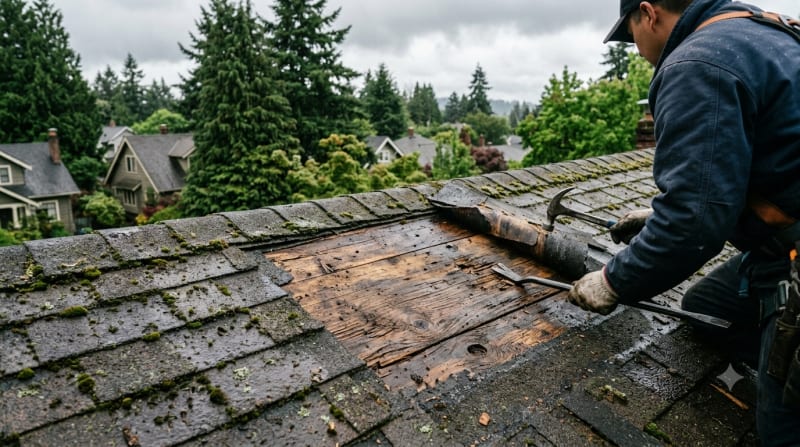
A roof repair addresses a specific problem while leaving most of the existing roofing system in place.
Typical repairs may involve:
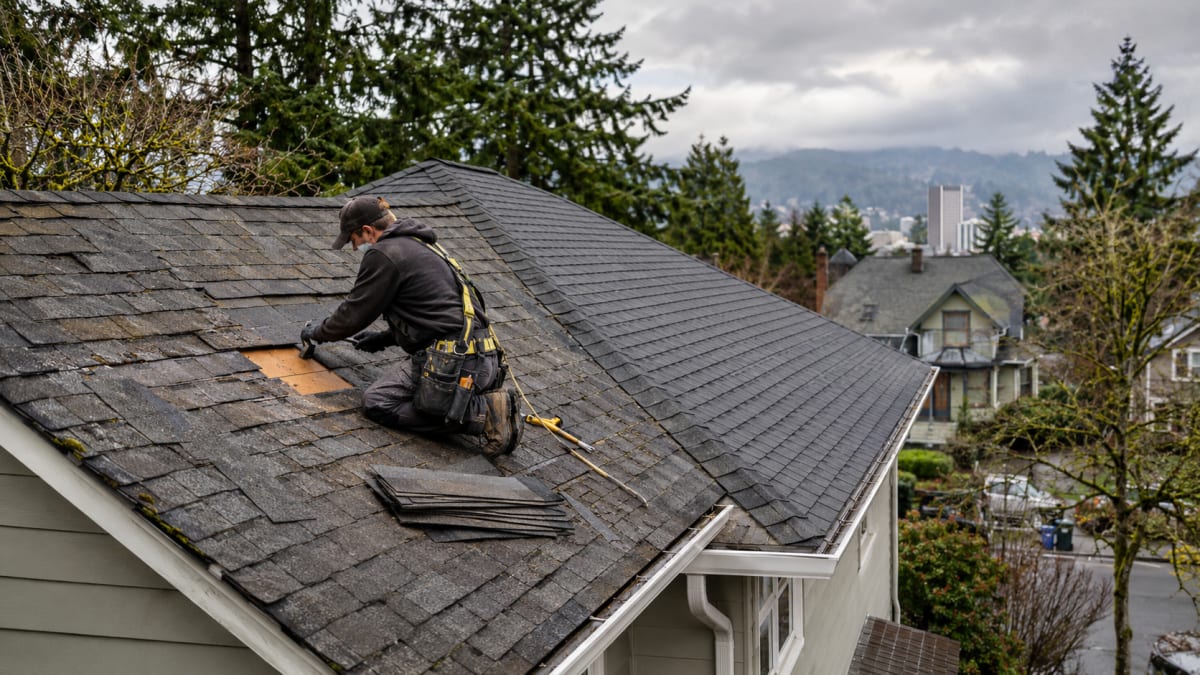
Replacing missing or damaged shingles
Repairing leaking valleys
Fixing chimney or skylight flashing
Replacing damaged pipe flashings
Repairing ridge or roof-edge areas
Correcting localized leak sources
Repairing gutter or fascia damage associated with the roof
A roof replacement involves removing the existing roofing materials and installing a new roofing system across the affected roof area.
Depending on the project, replacement may include:
Removal of existing roofing
Inspection of the roof decking
Replacement of damaged decking when necessary
New underlayment
Ice-and-water protection in critical areas
New flashing
Ventilation improvements
New architectural asphalt shingles
New ridge caps and starter shingles
Cleanup and final inspection
The right choice depends less on whether the roof has a problem and more on how extensive that problem is and what condition the rest of the roof is in.
When Roof Repair Usually Makes More Sense
Repair is often the better option when the problem is limited to one area and the surrounding roofing system is still in serviceable condition.
1. The Damage Is Localized
A single problem does not automatically mean an entire roof needs to be replaced.
Examples may include:
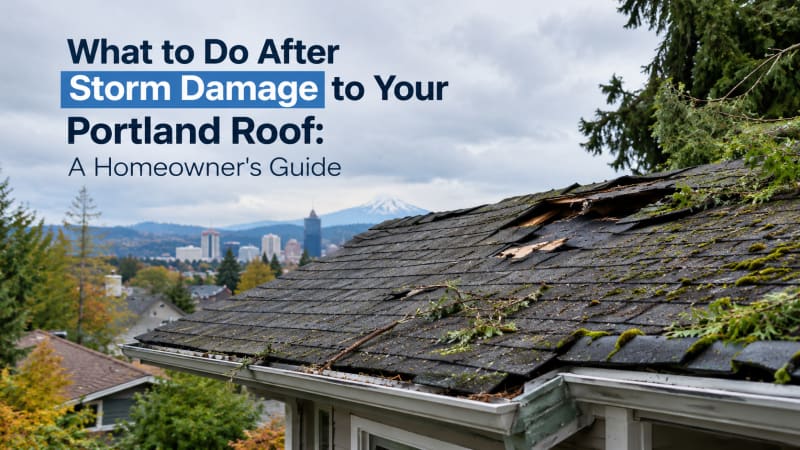
A few missing shingles after wind
One leaking pipe flashing
A small damaged valley section
Loose flashing near a chimney
A localized roof penetration problem
Minor damage caused by a fallen branch
If most of the roof is still performing properly, repairing the damaged area can be a practical and cost-effective solution.
2. The Roof Still Has Useful Life Remaining
Roof age matters, but age alone should not determine whether replacement is necessary.
A roof that is still in generally good condition may have many years of useful service remaining even if one component needs repair.
A professional inspection should consider:
Shingle condition
Granule retention
Flashing
Roof decking
Previous repairs
Ventilation
Moss or debris
Leak history
Overall roof performance
If those components remain serviceable, a repair may be enough.
3. The Leak Has a Clear, Repairable Source
A roof leak can sometimes be traced to a specific area, such as:
Damaged flashing
A failed pipe boot
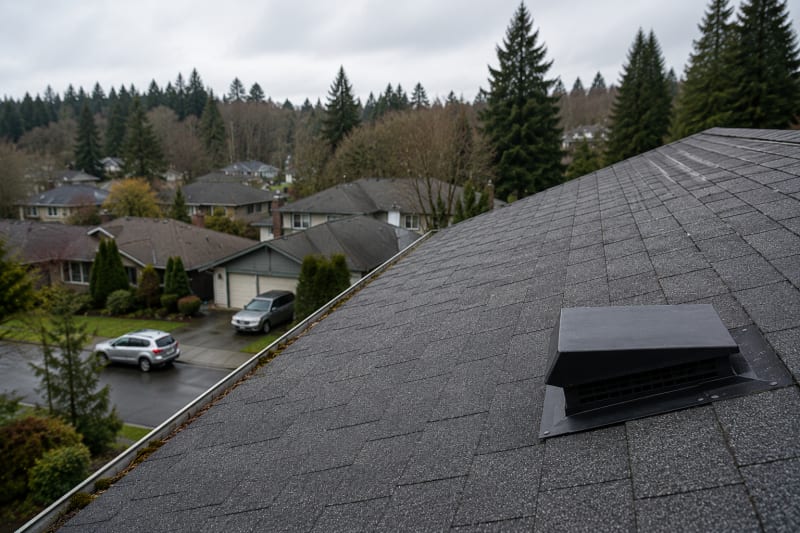
A roof vent
A small section of shingles
A chimney transition
A valley
Finding the actual source of the leak is important.
Water does not always enter directly above the stain you see inside the house. It can travel along decking, rafters, or other surfaces before becoming visible indoors.
That is why repairing only the visible symptom without identifying the source can lead to recurring problems.
4. Previous Repairs Are Limited
If your roof has needed only one or two isolated repairs over many years, another repair may be perfectly reasonable.
The concern begins when repairs become frequent or start appearing in multiple areas.
When Roof Replacement May Be the Better Choice
There comes a point when continuing to repair an aging or deteriorating roof may no longer provide good long-term value.
1. Problems Are Appearing Across Multiple Areas
One isolated leak is very different from leaks appearing around several parts of the roof.
Replacement deserves serious consideration when you begin seeing problems such as:
Multiple recurring leaks
Widespread shingle deterioration
Several damaged flashing areas
Significant granule loss
Numerous curling or cracked shingles
Deterioration across multiple roof slopes
At that point, repairing individual sections may only postpone a larger project.
2. Repairs Are Becoming More Frequent
Think about your roof's recent history.
Have you needed a repair almost every rainy season?
Did one leak get fixed only for another to appear somewhere else?
Repeated repairs can indicate that the roofing system as a whole is beginning to deteriorate.
The individual repairs may be performed correctly, but new problems can continue developing because other components are reaching the end of their service life.
3. The Roofing Materials Are Widely Worn
Some of the clearest signs that replacement may be approaching include:
Significant granule loss
Curling shingles
Cracked shingles
Brittle roofing materials
Large areas of moss-related deterioration
Repeated shingle loss
Visible wear across several roof slopes
When deterioration is widespread, replacing a few shingles may not solve the underlying issue.
4. Roof Decking Has Significant Problems
The roof decking sits underneath the roofing materials and provides the structural surface that the roofing system attaches to.
Moisture intrusion can sometimes lead to damaged, deteriorated, or warped decking.
If decking problems are extensive, removing the roofing materials may be necessary to properly inspect and repair the underlying structure.
5. You Are Paying for One Repair After Another
Repair is usually less expensive than replacement in the short term.
But cost should also be considered over several years.
If a homeowner continues spending money on repairs while the overall roof steadily deteriorates, those costs can accumulate without significantly extending the roof's useful life.
In that situation, replacing the roof may offer better long-term value and greater predictability.
How Portland's Climate Affects the Repair vs. Replacement Decision
Portland roofs experience conditions that can make seemingly small roofing problems more important.
A small opening in flashing or roofing materials may not cause obvious trouble during dry weather.
Once Portland's rainy season begins, repeated moisture exposure can reveal weaknesses quickly.
That is one reason it is better to address known roof issues before months of wet weather.
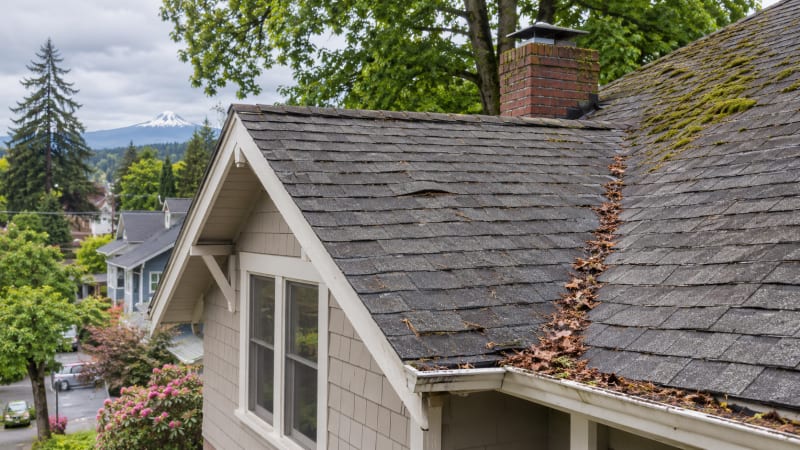
Moss is common on Portland roofs, particularly on shaded properties surrounded by mature trees.
Moss alone does not automatically mean a roof requires replacement.
However, heavy or long-term moss growth should be evaluated carefully.
After moss is removed, homeowners may discover:
Lifted shingles
Worn surfaces
Debris around valleys
Moisture-retaining areas
Material deterioration
If the underlying shingles remain serviceable, maintenance may be enough.
If moss has contributed to widespread damage on an already aging roof, replacement may deserve consideration.
Falling Leaves and Tree Debris
Portland's mature trees create another challenge.
Leaves, needles, and branches can accumulate in:
Gutters
Roof valleys
Behind chimneys
Around skylights
Low-slope roof transitions
Sometimes what appears to be a roofing failure is actually a drainage or maintenance issue.
That is one reason a full evaluation should happen before deciding the roof needs replacement.
Wind can damage isolated shingles or expose existing weak points along roof edges and ridges.
If the rest of the roof remains healthy, this type of localized damage may be repairable.
Widespread wind damage on an older roof is a different situation and may justify discussing replacement.
Should You Replace the Roof Before It Starts Leaking?
Sometimes.
Waiting until water is entering the home is not always the best strategy.
If a professional inspection shows widespread deterioration and the roof is clearly approaching the end of its useful service life, planning replacement before a major leak develops can offer several advantages.
You may have more time to:
Compare roofing options
Choose materials
Review estimates
Plan the project around weather
Prepare financially
Avoid emergency interior damage
A planned roof replacement is usually easier to manage than an unexpected roofing emergency during the wettest part of the year.
What If You Are Planning to Sell Your Portland Home?
The repair-versus-replacement decision can also depend on your plans for the property.
If you expect to sell soon, consider:
Current roof condition
Known leaks
Inspection findings
Remaining useful life
Visible deterioration
Potential buyer concerns
A roof does not always need to be replaced simply because a home is being sold.
But unresolved roofing problems can become an issue during a buyer's inspection.
Having the roof evaluated beforehand can help you understand your options.
Frequently Asked Questions
Is it better to repair or replace a leaking roof?
It depends on the cause of the leak and the condition of the rest of the roof. A localized flashing or shingle problem may be repairable. Multiple leaks or widespread deterioration may make replacement more practical.
How many roof repairs are too many?
There is no exact number. The important question is whether repairs remain isolated or whether new problems continue developing across different areas of the roof. Frequent repairs on an aging roof can be a sign that replacement should be evaluated.
Does moss mean I need a new roof?
No. Moss does not automatically mean the roof needs replacement. The moss should be addressed and the roofing materials underneath inspected for damage.
Can you repair only part of a roof?
Yes, depending on the problem. Localized shingle, flashing, valley, or penetration damage can sometimes be repaired while leaving the remainder of the roof intact.
Should I replace an old roof even if it is not leaking?
Not simply because of age. However, an older roof showing widespread material deterioration, repeated repair needs, or other signs of declining performance may be worth replacing before a major leak occurs.
Is roof replacement always more expensive than continuing repairs?
Replacement has a higher upfront cost, but repeated repairs on a failing roof can add up. The better financial decision depends on the roof's condition, remaining useful life, and expected future repair needs.
Why Portland Homeowners Choose TMIX Roofing
TMIX Roofing has more than 30 years of local roofing experience serving Portland and surrounding communities.
Our team provides:
Professional roof inspections
Roof repairs
Roof maintenance
Moss treatment
Complete roof replacements
Architectural asphalt shingle installation
Flashing repairs
Ventilation evaluations
Gutter services
We use our own in-house crews and focus on giving homeowners straightforward recommendations based on actual roof conditions.
If a repair is enough, that should be explained.
If replacement makes more sense long-term, homeowners should understand why.
The goal is not to sell the largest project. It is to determine what the roofing system actually needs.